Kind Words on Squared Paper

Kind Words on Squared Paper
Kind Words on Squared Paper – Parole gentili in inglese in 3D
Come si chiede qualcosa con gentilezza in inglese? E come si risponde a chi ci ringrazia? Con le schedeKind Words on Squared Paper, i bambini della scuola primaria scoprono espressioni da usare ogni giorno e le riproducono sul quaderno conlettere 3D colorate e piccoli disegni a quadretti.
Le espressioni delle schede
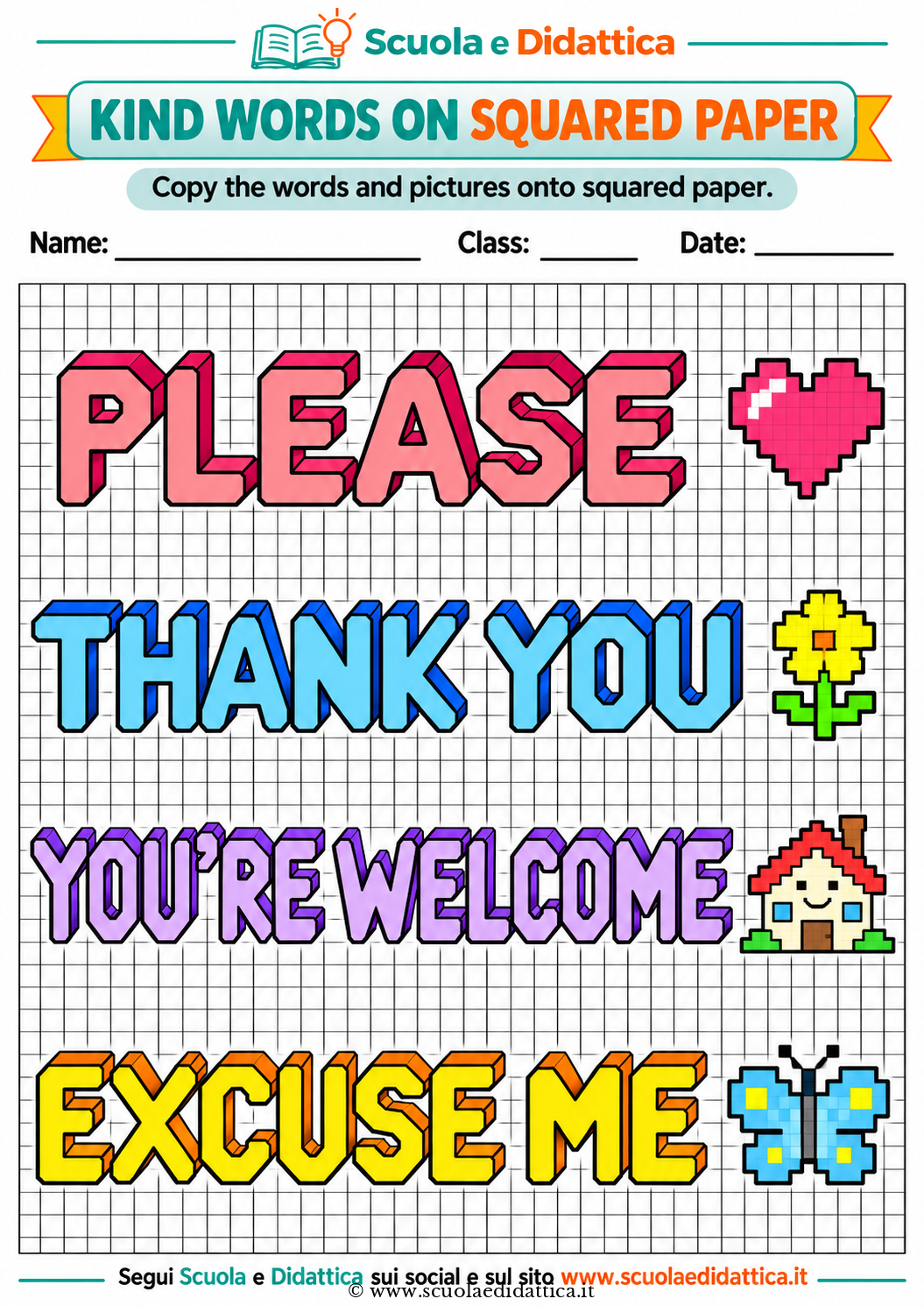
- Please– Per favore
- Thank you– Grazie
- You’re welcome– Prego
- Excuse me– Scusa / Permesso
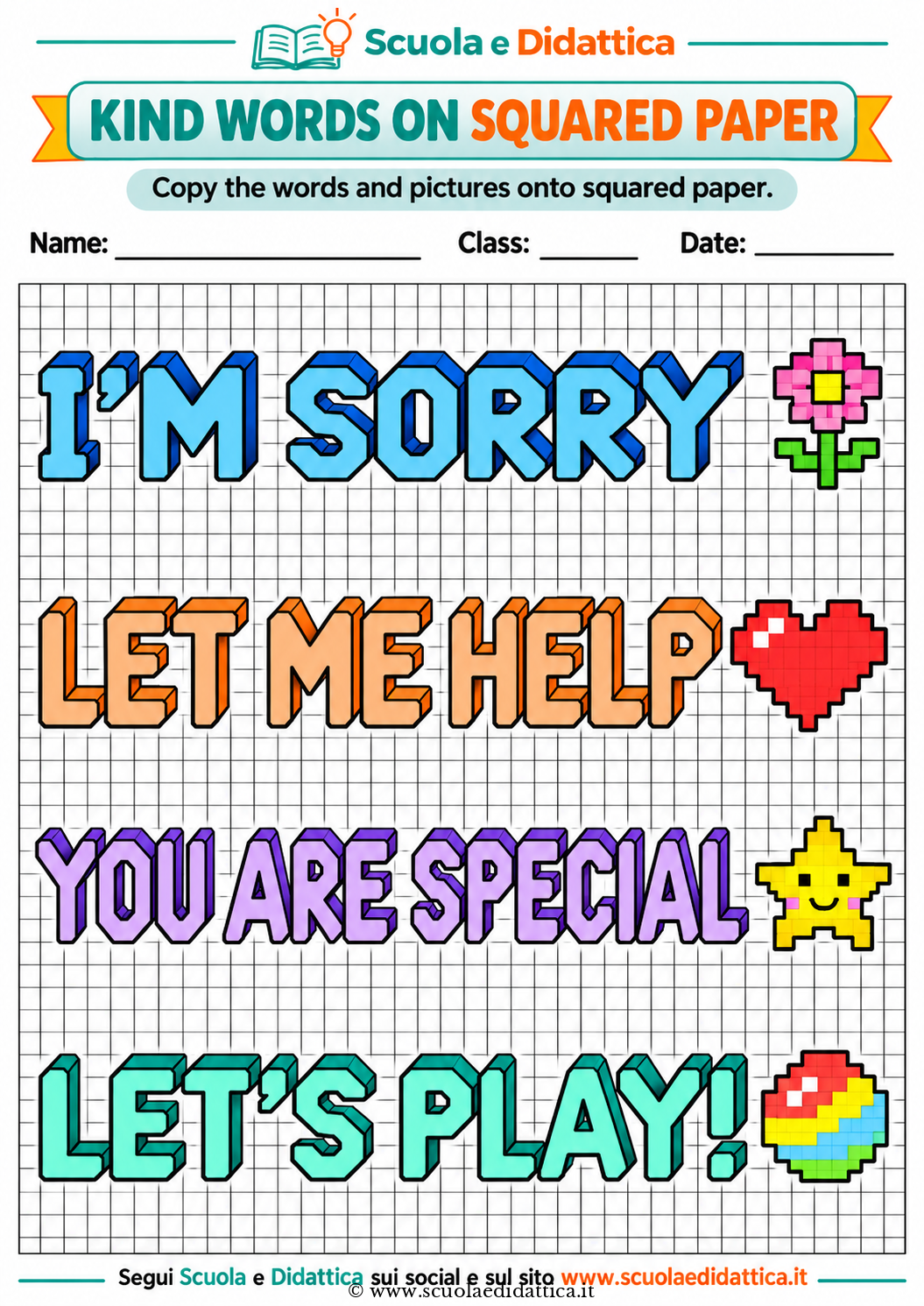
- I’m sorry– Mi dispiace
- Let me help– Ti aiuto
- You are special– Sei speciale
- Let’s play!– Giochiamo!
Come usare le schede in classe
- Leggete le espressioni ad alta vocee immaginate quando potreste usarle a scuola.
- Copiate le lettere e i disegnisul quaderno, contando i quadretti e osservando come le facce più scure danno profondità alle lettere.
- Provate un dialogo a coppie. Un bambino chiede“Can I borrow your pencil, please?”e poi ringrazia con“Thank you!”. Il compagno risponde“You’re welcome!”.
L’attività unisceinglese, educazione civica e disegno su griglia. È adatta alla Giornata della Gentilezza e a tutti i momenti dell’anno in cui si vuole esercitare l’inglese a partire da situazioni quotidiane.
Scarica le schede e scegli la prima espressione gentile da portare sul quaderno!
Kind Words on Squared Paper – A 3D Lettering Activity for Primary School
What can you say when you need to borrow a pencil, want to help a classmate or would like someone to join your game?Kind Words on Squared Paperis a printable activity that helps primary school children practise everyday English through colourful 3D lettering, small pixel art pictures and short conversations.
Each worksheet features four expressions in bold 3D letters, with a small picture beside each one. Children copy the lettering and pictures onto squared paper, using the grid to judge the height of the letters, leave space between words and see how the darker faces create a sense of depth. Then they put the expressions to use in familiar classroom situations.
Eight kind expressions for everyday situations
- Pleasemakes a request more polite.
- Thank youshows appreciation when someone helps or shares.
- You’re welcomeis a friendly reply to “Thank you”.
- Excuse mehelps us get someone’s attention politely or ask to pass.
- I’m sorryis a way to apologise when we make a mistake or upset someone.
- Let me helpis a way to offer help.
- You are specialtells someone that we value them.
- Let’s play!invites someone to join in.
How to use the worksheets in class
- Start with a situation.Ask what children could say if they accidentally bumped into a classmate or noticed someone standing alone at playtime.
- Read the expressions aloud.Say each one naturally and invite the class to repeat it. Compare“Excuse me”before asking to pass with“I’m sorry”after accidentally bumping into someone.
- Copy one expression and its picture.Count the squares, trace the front of each letter, then add the darker faces. Copy the picture row by row, checking which squares need colour.
- Act out a short exchange.In pairs, children choose an expression and use it in a scene about borrowing a pencil, offering help or inviting someone to play. Swap roles so both children get a turn to speak.
A short dialogue to try
A:Can I borrow your pencil, please?
B:Of course. Here you are.
A:Thank you!
B:You’re welcome!
What children practise
The activity connectsspoken English, social skills and drawing on a grid. Children learn to choose an expression that fits the situation, listen and respond to a partner, and pay attention to spacing and direction as they copy. Beginners can work with one short expression at a time. Children who are ready for more can write a two-panel comic showing a kind exchange, then draw one of the expressions in 3D as its title.
Download and print the worksheetsfor World Kindness Day or use them throughout the year whenever you want to practise friendly classroom English.
seguici su:www.scuolaedidattica.it e su sulla nostra pagina Facebook
Scarica i file

Kind Words on Squared Paper - pdf completo
Salva le immagini: ingrandisci e scarica